

How Far Does Your Euro Go? Eurostat Maps the EU's Vast Cost-of-Living Gap
New Eurostat data reveals that price levels and household welfare across the EU vary by as much as 80 percentage points — with major consequences for your purchasing power.
What happened
Eurostat has released two fresh datasets covering household material welfare and consumer price levels across all 27 EU member states for 2025. According to Eurostat, price levels range from roughly 63% to 140% of the EU average — meaning the same basket of goods can cost more than twice as much in one country compared to another. Denmark, Ireland, and Luxembourg rank among the most expensive, while several Central and Eastern European countries sit well below the EU midpoint. A separate Eurostat report shows that household material welfare — a broader measure of living standards — spans from around 73% to 145% of the EU average, reflecting similarly wide disparities in purchasing power.
Why it matters
These numbers are not just statistics for economists. They reflect the real-world divergence in what a paycheck buys depending on where you live, work, or retire within the same single market. The data lands at a moment when ECB Chief Economist Philip Lane has been publicly discussing the euro area's economic outlook, and ECB board member Piero Cipollone has been advancing the case for a digital euro — both signals that policymakers are actively thinking about how monetary tools reach ordinary households across very different national contexts. The price-level gap also raises questions about whether EU-wide policy decisions — from interest rates to welfare programmes — can serve all citizens equally well.
Impact on personal finance
If you are planning to relocate within the EU for work or retirement, the Eurostat figures are essential reading: moving from a low-price country to a high-price one without a corresponding salary increase can effectively shrink your disposable income by a third or more. For cross-border workers or remote employees paid in one country's wages while living in another, purchasing-power differences can work either in your favour or sharply against you. Travellers and expats should also note that everyday costs — groceries, rent, transport — vary enormously even within the eurozone, so budgeting based on home-country prices is likely to mislead. For savers, the data is a reminder that nominal returns on deposits or investments need to be weighed against local price levels, not just headline inflation figures.
Regional perspective
EU: The disparities are sharpest between Western Europe (Denmark, Ireland, Luxembourg topping the price index) and parts of Central and Eastern Europe, affecting everything from grocery bills to rental costs. UK: Separately, the Bank of England published its gilt-sale schedule for Q3 2026, continuing its programme of quantitative tightening — a reminder that UK monetary conditions are evolving independently from the EU, which may influence cross-border financial planning for anyone with assets or income in both markets.

EU Average Full-Time Salary Rose 4.3% in 2025, Eurostat Reports
The average annual full-time salary in the EU reached 41,500 EUR in 2025, a 4.3% year-on-year increase, according to new Eurostat data. Luxembourg tops the rankings at 85,600 EUR.
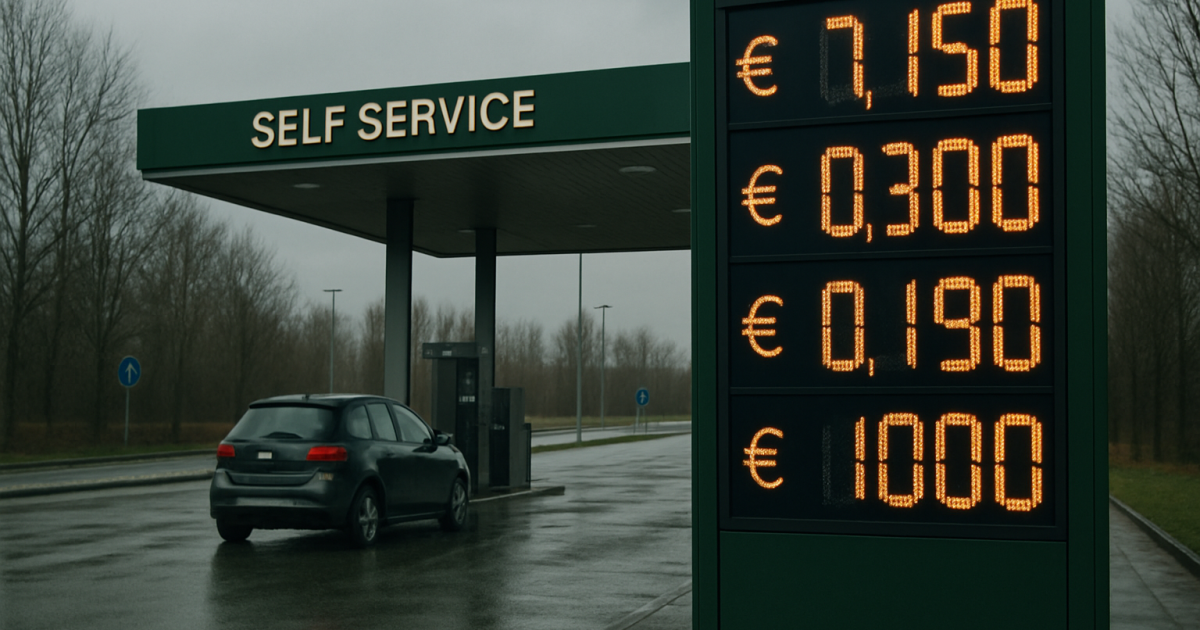
EU Fuel Prices Surge 23.8% Year-on-Year — What It Costs Your Family
Fresh Eurostat data shows EU fuel prices jumped 23.8% compared to a year ago in August 2026, up from 16.9% in July. Here's what that acceleration means for your wallet.

UK Credit Card Defaults Hit 17-Year High Amid EU Fuel Price Surge
UK credit card defaults have reached their worst level since the 2008 crisis, while EU fuel prices surged nearly 17% in a year. Here's what it means for your household budget.
This article is for informational and educational purposes only. It is not individual financial, investment, tax or legal advice and is not a personal recommendation for any particular reader; any public investment recommendations are subject to specific rules. It may contain inaccuracies or be out of date — verify the information independently, consider your own situation and consult a qualified professional before making individual decisions. It was created with the help of AI and reviewed by an editor before publication. It draws on the publicly available sources listed below.
Sources
-
1
Philip R. Lane: Outlook for the euro area economyECB Press Releases · · retrieved
-
2
Kde si nepůjčovat: Úvěr 20 000 Kč přeplatíte u některých společností i o 10 000 Kč za měsícMěšec.cz — Osobní finance · · retrieved
-
3
Piero Cipollone: Digital euro: the future of moneyECB Press Releases · · retrieved
-
4
Asset Purchase Facility: Gilt Sales – Market Notice 19 June 2026Bank of England News · · retrieved
-
5
Household consumption price levels across the EU in 2025Eurostat — Economy and Finance News · · retrieved
-
6
Household material welfare across the EU in 2025Eurostat — Economy and Finance News · · retrieved