

Middle East Tensions Push Oil Prices Up — And Could Lift Interest Rates Too
Oil hit its highest price since 2022 as Middle East tensions escalate. The Bank of England is already warning that rates could rise — here's what that means for your wallet.
What happened
Oil prices climbed to their highest level since 2022 following reports that the US administration is preparing new military options against Iran, according to BBC Business. At the same time, the Bank of England kept its benchmark rate unchanged at 3.75%, but issued an unusually direct warning: if the Middle East conflict escalates further and drives inflation higher, a rate increase may be necessary. The ECB's Vice President Luis de Guindos also weighed in on the eurozone outlook in an interview with El País, signalling continued attention to inflation risks across the Atlantic.
Why it matters
Geopolitical shocks and energy prices have a well-established link to inflation — when oil gets more expensive, transport, manufacturing, and heating costs all rise, and those increases eventually show up in consumer prices. Central banks, whose primary job is to keep inflation in check, then face pressure to raise interest rates in response. This dynamic played out sharply in 2022, and the current warnings suggest policymakers are watching for a potential repeat. An ECB research paper published this week also highlights that US monetary tightening ripples through global economies, hitting countries with higher inequality the hardest — a reminder that these decisions are rarely contained within one region.
Impact on personal finance
If oil prices remain elevated, expect your energy bills and fuel costs to creep upward in the coming months. Mortgage holders on variable or tracker rates should pay close attention: a Bank of England rate rise, if it materialises, would directly increase monthly repayments. People currently shopping for a fixed-rate mortgage may want to understand the full range of available terms before conditions change. On the upside, savers could benefit if higher rates eventually feed into better returns on savings accounts and cash ISAs. Household budgets are likely to feel squeezed from both sides — higher energy costs and potentially higher borrowing costs — so reviewing your monthly outgoings now makes practical sense.
Regional perspective
UK: The Bank of England's explicit warning makes this most immediately relevant for British households, particularly those with variable-rate mortgages or upcoming fixed-rate renewals. EU: The ECB is monitoring the same inflationary pressures; eurozone borrowers and savers should watch for signals from Frankfurt in the coming weeks. Global: Rising oil prices affect consumers worldwide, but the ECB's research suggests economies with greater income inequality — many of which are emerging markets — face amplified risks from any resulting monetary tightening.

US Economy Grew 3.4% in Q3 2026 — What It Means for Your Wallet
The US economy accelerated sharply in Q3 2026, growing at a 3.4% annualized rate. Here's what that means for rates, savings, and everyday costs.

Eurozone Inflation Jumps to 3.3% — What It Means for Your Budget
Inflation in the euro area unexpectedly accelerated to 3.3% in August 2026, squeezing household budgets already strained by high food, energy, and housing costs.
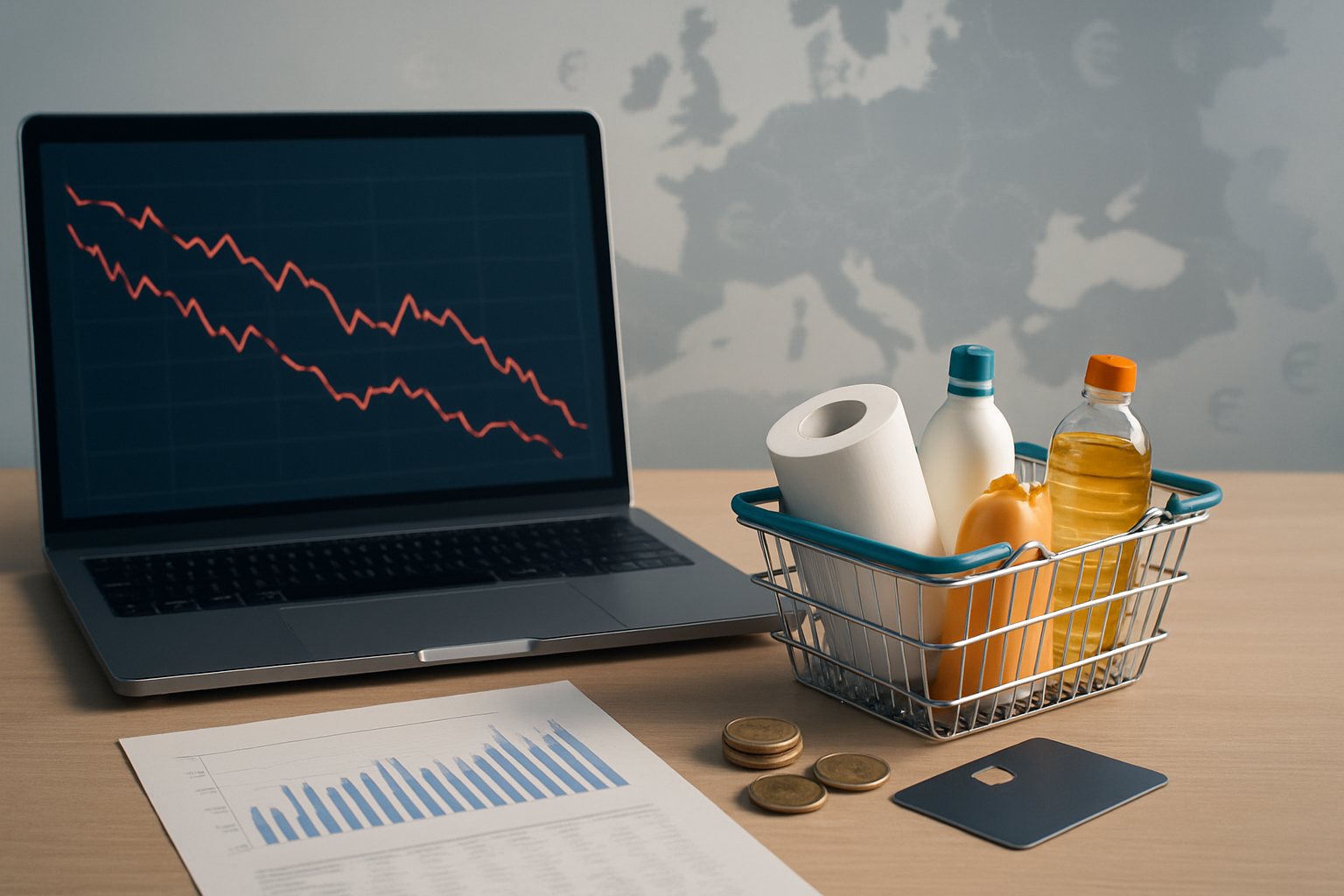
Euro Area Prices Dip as Uncertainty Grows: What It Means for You
Industrial prices in the eurozone fell in June, while persistent uncertainty continues to weigh on the economy. Here's what these signals mean for your wallet.
This article is for informational and educational purposes only. It is not individual financial, investment, tax or legal advice and is not a personal recommendation for any particular reader; any public investment recommendations are subject to specific rules. It may contain inaccuracies or be out of date — verify the information independently, consider your own situation and consult a qualified professional before making individual decisions. It was created with the help of AI and reviewed by an editor before publication. It draws on the publicly available sources listed below.
Sources
-
1
Bank of England says rates could rise as Iran war fuels inflationBBC Business · · retrieved
-
2
Luis de Guindos: Interview with El PaísECB Press Releases · · retrieved
-
3
Vláda schválila návrat školkovného a slevy na studenta. Využít je ale ještě chvíli nepůjdeMěšec.cz — Osobní finance · · retrieved
-
4
Christine Lagarde: IMFC StatementECB Press Releases · · retrieved
-
5
Oil price hits highest since 2022 after report Trump to be briefed on new Iran optionsBBC Business · · retrieved
-
6
Beyond borders, within societies: inequality and the global transmission of US monetary policyECB Publications · · retrieved